Berberine has gone from an obscure plant extract to one of the most talked about supplements in the country. You have probably seen it on social media, sometimes with promises that go far past what the research shows. It is a real compound with real studies behind it, and it also has real side effects and a long list of possible drug interactions.
This guide covers where berberine comes from, what scientists have studied it for, how it seems to work, the amounts used in research and who should talk to a doctor before trying it. We also explain why it shows up in GLPro and what we still don't know about the amount in each capsule.
What berberine is and where it comes from
Berberine is a bitter, bright yellow compound that several plants make in their roots, stems and bark. Chemists call it an alkaloid, the same broad family of plant chemicals that includes caffeine. It is found in goldenseal, European barberry, Oregon grape, tree turmeric (Berberis aristata) and Chinese goldthread (Coptis chinensis). If you have ever scraped the bark off a barberry root and seen the yellow wood underneath, that color is mostly berberine.
Supplements usually contain berberine hydrochloride, a stable salt form that fits easily into a capsule. The powder tastes so bitter that almost nobody takes it any other way. Labels sometimes name the source plant, but plenty of them simply say berberine HCl.
Berberine isn't something you get from a normal diet. Dried barberries, the tart red fruit used in Persian rice dishes, come from one of the same shrubs, but the berberine sits mainly in the root and bark, so the fruit gives you very little.
Traditional use
People used berberine plants long before anyone could isolate the compound. Goldthread, called huang lian in Chinese, appears in traditional Chinese formulas for diarrhea and other digestive complaints. Tree turmeric has a place in Ayurvedic practice in India, where it was used for the skin, the eyes and the stomach. In North America, Native American healers used goldenseal and Oregon grape for wounds and digestive trouble, and European settlers adopted those uses.
That history tells us people found these plants useful, mostly for the gut. It tells us nothing about blood sugar, since traditional healers had no way to measure it. The metabolic research is much newer and has grown fast in the last two decades.
What the research has looked at
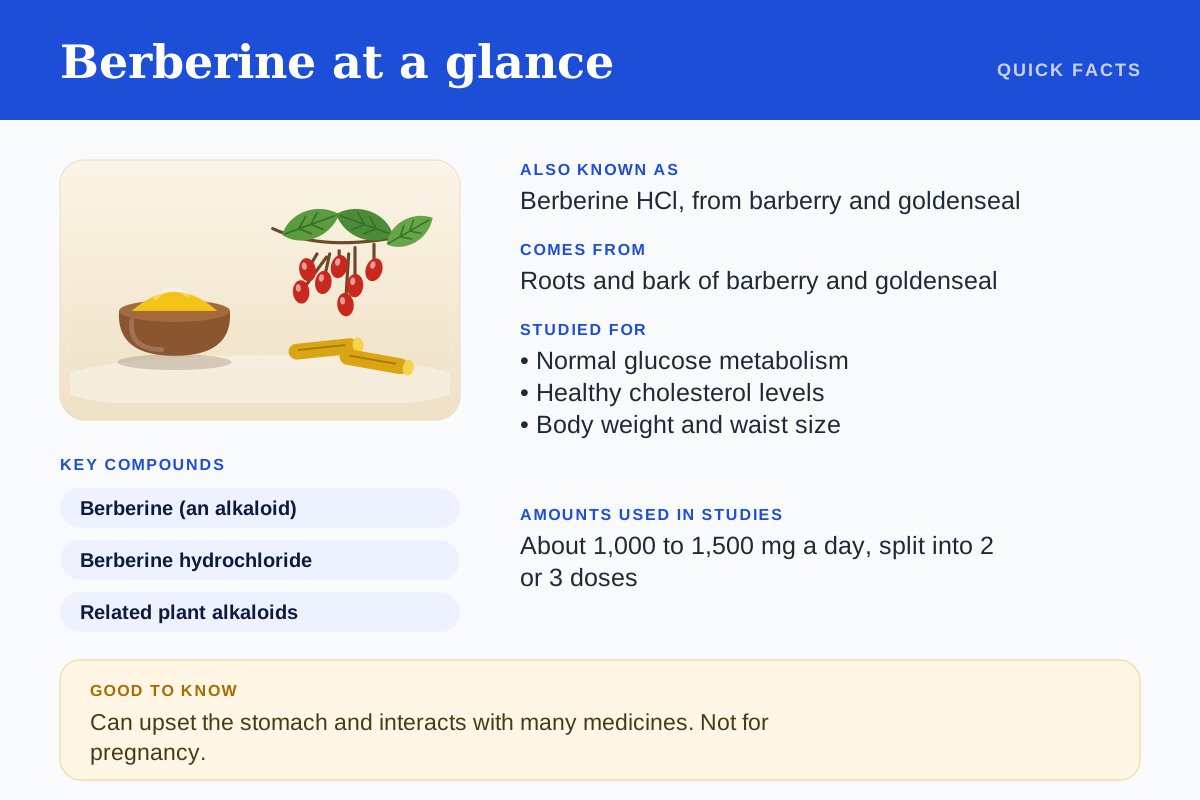
Scientists have studied berberine mainly for blood sugar, cholesterol and body weight. A large share of the trials come from China. Many of them are small and short, often 8 to 12 weeks, and they use different products and amounts, which makes them hard to compare with each other.
In those trials, berberine has tended to produce modest drops in fasting blood sugar, LDL cholesterol and triglycerides. The National Center for Complementary and Integrative Health (NCCIH) describes a 2022 review that found decreases in weight and body mass index in people taking berberine, mostly at more than 1 gram a day for longer than 8 weeks. NCCIH also says the evidence is not conclusive and that many of the studies had a high risk of bias.
Who took part in the studies matters. Most trials enrolled adults with type 2 diabetes, high cholesterol or fatty liver disease, so the results may not apply to healthy people whose numbers are already normal. If you take medicine to lower your blood sugar, keep taking it and talk with your doctor before adding berberine or any product that contains it, because berberine can add to the effect of those drugs.
For a healthy adult, the research suggests berberine may support healthy blood sugar levels already in the normal range and supports normal glucose metabolism. Larger and longer trials with better design are still needed before anyone can say how much difference it makes for people without a medical condition.
How berberine works in the body
Most of what we know about the mechanism comes from lab and animal studies. Berberine's best known effect is on an enzyme called AMPK (AMP-activated protein kinase). You can think of AMPK as a fuel gauge inside each cell. When it switches on, muscle and fat cells pull in more glucose from the blood, the body burns more fat for energy, and the liver makes less new glucose. Exercise switches on AMPK too, which is part of why researchers find berberine interesting.
Berberine also seems to act in the gut. Very little of a swallowed dose reaches the bloodstream, because the intestine and liver clear most of it quickly. Some researchers think much of its effect happens in the intestine, where it may slow the breakdown of carbohydrates and shift the mix of gut bacteria. In the liver, studies suggest it raises the number of LDL receptors, which pull LDL cholesterol out of the blood.
Because berberine leaves the body quickly, studies usually split the daily amount into two or three doses taken with meals.
Amounts used in studies
Berberine isn't a nutrient, so it has no recommended daily intake. Researchers have used a range of amounts, and MedlinePlus reports that adults have used 0.4 to 1.5 grams a day for up to 2 years. The patterns below are the ones that come up most often.
| Pattern in research | Daily total | Notes |
|---|---|---|
| 500 mg twice a day | 1,000 mg | Taken with meals |
| 500 mg three times a day | 1,500 mg | Common in blood sugar and cholesterol trials |
| Range reported by MedlinePlus | 400 to 1,500 mg | Adults, for up to 2 years |
Most trials lasted three months or less, so much less is known about taking berberine for years at a time. Stomach side effects become more likely as the dose goes up, which is one reason study participants usually took it with food.
Side effects and drug interactions
The most common complaints involve the digestive system: nausea, cramping, bloating, gas, constipation or diarrhea. They are usually mild and often ease when the amount is split up or taken with a meal.
Drug interactions are the bigger concern. Berberine slows several liver enzymes in the cytochrome P450 family, which break down a large number of prescription drugs. When those enzymes slow down, a medicine can build up to higher levels than your doctor intended. NCCIH notes that berberine has been shown to interact with cyclosporine, a drug used to prevent rejection of transplanted organs. Other medicines handled by the same enzymes could be affected as well, so a pharmacist should check your full list.
Berberine can also add to glucose-lowering medicine. Taking both may push blood sugar too low, which can cause shakiness, sweating, confusion or a racing heartbeat.
Who should avoid berberine or ask first
- Pregnant women. Berberine can cross the placenta, and NCCIH says it may be unsafe during pregnancy.
- Breastfeeding mothers, because of possible effects on the infant.
- Newborns and infants. Berberine has been linked to a harmful buildup of bilirubin in infants, which can cause brain damage.
- Anyone taking cyclosporine or other medicines broken down by the liver.
- People on medicine for blood sugar, blood pressure or blood thinning.
If you take any prescription medicine, talk with your doctor or pharmacist before trying berberine, and keep taking what you have been prescribed. A supplement should never replace it.
Tips if you decide to try it
Get the go-ahead from your doctor first, especially if you take medicine every day. Look for a product that has been tested by an independent lab, since the amount of berberine in supplements can differ from what the label says. Take it with food to go easier on your stomach. And give it time: the studies measured changes over weeks and months, so a few days tells you very little.
Why berberine is in GLPro
According to the GLPro team, berberine is one of five listed ingredients, along with chromium picolinate, cinnamon bark extract, alpha lipoic acid and bitter melon. Of the five, berberine has the largest body of human research on glucose metabolism, so it is a sensible pick for a formula built around blood sugar support.
What we can't tell you is how much berberine each capsule holds. The brand doesn't publish amounts or a Supplement Facts panel, and GLPro is taken as one capsule a day. Most studies used 1,000 to 1,500 mg spread across the day, and a single capsule shared by five ingredients would struggle to hold that much berberine on its own. Without a label, though, we can't confirm the real number either way.
Even a small amount of berberine can matter for drug interactions, so the safety advice above applies to GLPro just as it does to a plain berberine supplement. For our take on the whole formula, the price and the 60-day money-back guarantee, read our full GLPro review.
Frequently asked questions
Is berberine safe to take every day?
Most adults in studies took it daily for up to three months, and some for longer, with mainly stomach side effects such as cramping, constipation or diarrhea. It is not safe for pregnant or breastfeeding women or infants, and it interacts with many medicines, so check with your doctor or pharmacist before taking it every day.
How long does berberine take to work?
Studies usually measured changes after 8 to 12 weeks, and the weight results NCCIH describes were seen mostly after more than 8 weeks. A few days or a couple of weeks is too short to judge, and results vary from person to person.
Can I take berberine with prescription medicine?
Only with your doctor's or pharmacist's approval. Berberine slows liver enzymes that break down many drugs, it is known to interact with cyclosporine, and it can add to glucose-lowering medicine. Keep taking your prescribed medicine and ask before adding berberine.
How much berberine is in GLPro?
The GLPro team lists berberine as an ingredient but does not publish the amount or a Supplement Facts label. Studies typically used 1,000 to 1,500 mg a day, so we can't say how GLPro compares.
Sources
- NCCIH: Berberine and Weight Loss: What You Need To Know
- MedlinePlus: Berberine
- GLPro official site (tryglpro.com): listed ingredients
This guide is for general information and is not medical advice. Talk to your doctor before starting any supplement, especially if you take medication.