Healthy blood sugar is mostly built in ordinary moments: what goes on your dinner plate, whether you sit down after lunch or take a stroll, how late you stay up scrolling. None of these choices looks dramatic on its own. Repeated most days, they shape how your body handles glucose over months and years.
This guide covers the everyday habits with the best support behind them, with numbers taken from the CDC, the American Diabetes Association and MedlinePlus. If you have diabetes or think you might, see your doctor, keep taking any prescribed medicine, and check with your care team before making big changes to food or exercise, since both can change how your medicine works.
Every time you eat, your blood sugar rises and then comes back down as insulin moves glucose into your cells. How steep that rise is, and how hard your body has to work to bring it down, depends on the meal and on things like your activity, sleep and stress that day. A body that meets big, fast spikes several times a day, every day, is under more strain than one that sees gentler curves.
The habits below aim at those curves. They overlap with what doctors recommend for heart health and weight, so the effort pays off in more than one way. You don't need to adopt them all at once. Most people do better picking one or two, making them automatic, and then adding another.
Build your plate the simple way
The CDC and the American Diabetes Association both teach a plate method that works for almost anyone, with or without a blood sugar concern. Start with a 9-inch dinner plate and divide it like this:
- Half the plate: non-starchy vegetables such as salad greens, broccoli, green beans, peppers, cauliflower or tomatoes
- One quarter: lean protein such as chicken, fish, eggs, tofu or beans
- One quarter: carbohydrate foods such as whole grains, potatoes, corn, fruit or a cup of milk
You don't need to count anything. Because vegetables and protein fill most of the plate, the starchy part shrinks without feeling like a diet. Choosing minimally processed carbohydrates helps too: brown rice over white, whole fruit over juice, steel-cut or rolled oats over instant sweetened packets.
Order may matter as well. Small studies have found that eating vegetables and protein before the starchy part of the meal is linked to a gentler rise in blood sugar afterward. It costs nothing to try, so start dinner with the salad and save the bread for later.
Get more fiber, slowly
Fiber slows the digestion of carbohydrate, so glucose enters the blood more gradually. Soluble fiber, found in oats, barley, beans, lentils, apples and citrus, forms a gel in the gut. Bacteria in the colon also ferment some fibers into compounds that feed the cells lining the gut and help trigger fullness hormones such as GLP-1.
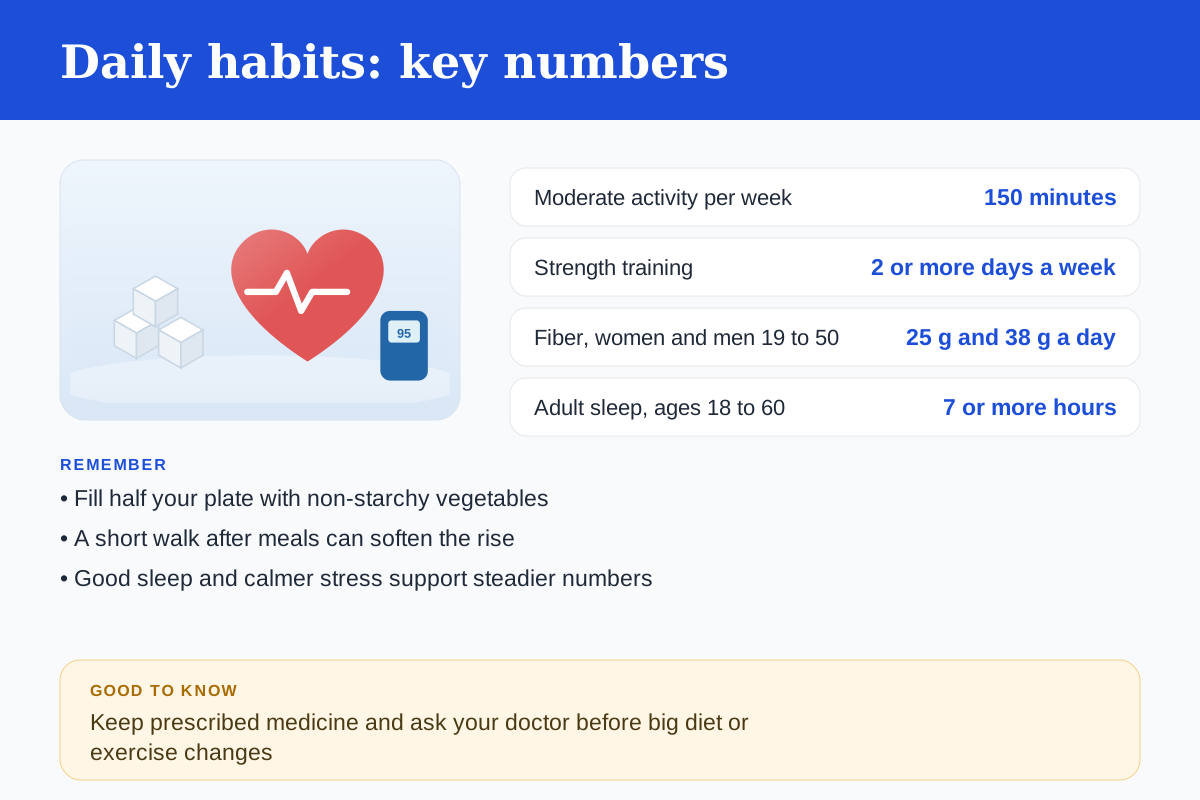
MedlinePlus lists a daily target of 25 grams of fiber for women and 38 grams for men aged 19 to 50. Easy ways to get there:
- Swap white bread for whole grain bread with at least a few grams of fiber per slice.
- Add a half cup of beans or lentils to soups, salads or rice dishes.
- Keep whole fruit on the counter and eat the skin on apples and pears.
- Sprinkle ground flaxseed or chia on yogurt or oatmeal.
- Snack on raw vegetables, nuts or air-popped popcorn instead of crackers.
Add fiber over a couple of weeks and drink more water as you go. A sudden jump often causes gas and bloating, which is usually why people give up.
Rethink what you drink
Liquid sugar is absorbed fast because there is nothing to slow it down. Regular soda, sweet tea, lemonade, energy drinks, sweetened coffee drinks and fruit juice can push blood sugar up quickly, and they don't fill you up the way food does.
Water is the default. Plain or sparkling water with a squeeze of lemon, unsweetened iced tea, and coffee or tea with a splash of milk all work. If you love juice, have a small glass with a meal rather than on its own, or eat the whole fruit instead.
Alcohol needs its own mention. In people who take insulin or certain glucose-lowering pills, drinking can cause low blood sugar, especially on an empty stomach. If that applies to you, ask your doctor how much is safe and always eat when you drink.
Take a walk after meals
Working muscles pull glucose out of the blood, and they can do some of this without needing as much insulin. That is why a walk after eating, when blood sugar is naturally rising, is one of the simplest habits to adopt. Research on post-meal walks is mostly short-term and in small groups, but the findings consistently point toward a smaller rise after meals in people who move compared with people who sit.
You don't need a long walk. A stroll around the block after dinner, a few laps of the office after lunch, or even marching in place while the kettle boils all count toward your daily movement.
For overall health, the CDC recommends at least 150 minutes a week of moderate activity for adults, such as brisk walking, plus muscle-strengthening activity on 2 or more days a week. That can be 30 minutes on 5 days, or shorter sessions that add up. Strength work matters for blood sugar because muscle is where much of your glucose ends up after a meal. Body-weight squats, wall push-ups, resistance bands or gardening all qualify.
Protect your sleep
Short or broken sleep can make the body respond less well to insulin the next day, and tired people tend to reach for sugary snacks and skip workouts. The CDC lists sleeping less than 7 hours a night as a factor linked to a higher risk of several chronic conditions, type 2 diabetes among them.
The CDC recommends 7 or more hours of sleep a night for adults aged 18 to 60, and 7 to 9 hours for ages 61 to 64. A few habits that help:
- Go to bed and get up at about the same time every day, weekends included.
- Keep the bedroom dark, quiet and cool.
- Put screens away for the last half hour before bed.
- Have caffeine early in the day and keep evening alcohol light.
Loud snoring, gasping during sleep or heavy daytime sleepiness can point to sleep apnea, which is common and treatable. Mention it to your doctor.
Keep stress from running the show
When you are stressed, the body releases cortisol and adrenaline, which tell the liver to put more glucose into the blood. That made sense when stress meant running from danger. During a long stretch of work deadlines or caregiving, it can keep blood sugar higher than usual, and stress also makes it harder to stick to good food and sleep habits.
You can't remove stress, but you can give your body regular breaks from it. Slow breathing for a few minutes, a walk outside, time with friends, prayer or meditation, and hobbies that absorb your attention all help. Physical activity does double duty here, since it lowers stress and uses up glucose at the same time.
A sample blood sugar friendly day
Here is how these habits can fit into an ordinary day without much extra effort.
| Time | Habit | Why it helps |
|---|---|---|
| Breakfast | Oatmeal with berries, nuts and ground flaxseed, coffee with milk | Fiber and protein slow the morning rise |
| Mid-morning | Water and a short stretch break | Breaks up long sitting |
| Lunch | Half-plate salad, grilled chicken, a scoop of beans | Plate method with extra fiber |
| After lunch | Short walk | Muscles take up glucose as it rises |
| Snack | Apple with peanut butter | Whole fruit plus protein and fat |
| Dinner | Vegetables first, then salmon and brown rice | Gentler rise after the meal |
| Evening | Short walk, screens off, bed on time | Activity plus 7 or more hours of sleep |
Check in with your doctor
Habits work best when you know your starting point. The ADA recommends blood sugar screening for all adults from age 35, repeated at least every 3 years if results are normal, and sooner if you have risk factors. A fasting glucose under 100 mg/dL and an A1C under 5.7% are considered normal.
See your doctor sooner if you notice strong thirst, frequent urination, blurry vision, slow-healing sores or weight loss you can't explain. If you already have diabetes, keep taking your prescribed medicine, and tell your care team before starting a new exercise routine or supplement, because changes in activity can affect how your medicine works.
Where GLPro fits
Some readers like to add a supplement on top of these habits. GLPro is one option: a once-a-day capsule whose listed ingredients, according to the GLPro team, are berberine, chromium, cinnamon bark, alpha lipoic acid and bitter melon. Each has been studied for its role in normal glucose metabolism. The company doesn't publish ingredient amounts, and it is a supplement, not medicine, so it can't replace the food, movement and sleep habits above or any treatment your doctor prescribes.
If you want to try it, check with your doctor first, especially if you take glucose-lowering, blood pressure or blood thinning medicine. It comes with a 60-day money-back guarantee. We go through the ingredients, costs and drawbacks in our GLPro review.
Frequently asked questions
Does walking after meals really help blood sugar?
Short-term studies suggest it does. Working muscles take up glucose from the blood, so a short walk after eating tends to soften the rise that follows a meal. It also counts toward the CDC's recommendation of at least 150 minutes of moderate activity a week.
How much fiber should I eat each day?
MedlinePlus lists 25 grams a day for women and 38 grams a day for men aged 19 to 50. Good sources include oats, barley, beans, lentils, vegetables, whole fruit, nuts and seeds. Increase fiber gradually and drink more water to avoid gas and bloating.
Can lack of sleep affect blood sugar?
Yes. Short or broken sleep can make the body respond less well to insulin the next day and can increase cravings for sugary food. The CDC recommends 7 or more hours of sleep a night for adults aged 18 to 60, and links regular short sleep to a higher risk of type 2 diabetes and other chronic conditions.
Can healthy habits replace my diabetes medicine?
Do not stop or change prescribed medicine on your own. Healthy eating, activity and sleep support any treatment plan, but only your doctor can decide whether your medicine should change. Tell your care team about new routines and any supplements, because they can affect how your medicine works.
Sources
- CDC: Diabetes meal planning
- American Diabetes Association: Diabetes Plate Method
- MedlinePlus: High-fiber foods
- CDC: Adult activity, an overview
- CDC: About Sleep
- American Diabetes Association: Standards of Care, screening
- NIDDK: Low Blood Glucose (Hypoglycemia)
This guide is for general information and is not medical advice. Talk to your doctor about your own numbers and treatment.