Wearable glucose sensors have turned the after-meal blood sugar curve into something people screenshot and share. A bowl of rice shows a steep hill, a salad shows a gentle bump, and suddenly everyone wants to know whether their own spikes are a problem.
Some rise after eating is part of normal digestion. This guide explains why it happens, what a typical response looks like, the reference numbers doctors use, and the habits that make the rise smaller. It is general education. If you have diabetes or think you might, your doctor's targets come first, and any prescribed medicine should stay exactly as prescribed.
Why blood sugar rises after you eat
When a meal contains carbohydrate, your gut breaks the starch and sugar into glucose and absorbs it into the blood. The level starts to climb within minutes of the first bites. The pancreas responds by releasing insulin in two waves: a quick burst stored and ready to go, then a slower, steadier release that lasts as long as glucose keeps arriving.
Insulin opens the door for glucose to move into muscle, liver and fat cells. At the same time, the liver stops sending out its own stored glucose, because the meal is now supplying plenty. As the absorbed glucose is cleared, the level drifts back toward where it was before you ate. Gut hormones released during the meal help the pancreas time all this, which is why the same sugar eaten as food triggers more insulin than if it were dripped straight into a vein.
So a rise after eating is expected. What matters is how high it goes, how fast it climbs, and how long it takes to settle.
What a normal after-meal response looks like
In a person with healthy glucose control, blood sugar usually peaks somewhere in the first hour or so after a meal and returns close to its starting level within a few hours. The exact shape depends heavily on the food. A sugary drink on an empty stomach produces a sharp, early peak. A mixed meal with vegetables, protein and fat produces a lower, rounder curve.
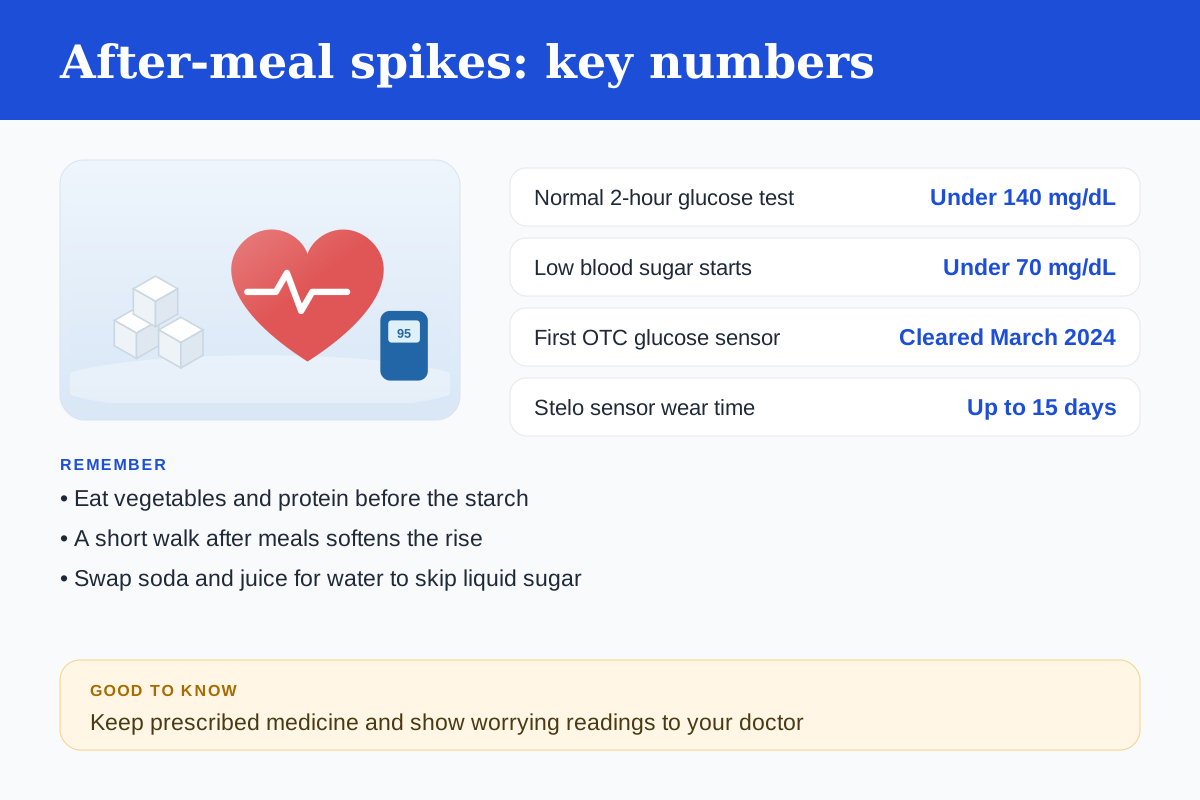
Doctors don't judge after-meal health from a random home reading. They use a standard test called the oral glucose tolerance test: you fast, drink a set amount of glucose, and have your blood drawn two hours later. These are the American Diabetes Association cutoffs for that 2-hour value:
| 2-hour glucose tolerance result | What it means |
|---|---|
| Under 140 mg/dL | Normal |
| 140 to 199 mg/dL | Prediabetes range |
| 200 mg/dL or higher | Diabetes range, confirmed with repeat testing |
For people who already have diabetes, the ADA's general goal is a peak under 180 mg/dL one to two hours after the start of a meal. That is a treatment target set with a doctor, and it is often adjusted for each person. It isn't a test for people who feel well.
If home readings after meals look high to you, write down the times and foods and take the log to your doctor, who can order the proper test. Book a visit sooner if you notice strong thirst, frequent urination, blurry vision, slow-healing sores or weight loss you can't explain. Feeling shaky, sweaty or confused a few hours after eating is also worth mentioning, since it can point to blood sugar dropping too low.
What makes spikes bigger
The size of a spike depends on the meal and on what your body is dealing with that day. These are the common drivers:
- Refined carbohydrates. White bread, white rice, crackers, pastries and sweetened cereal are digested quickly, so glucose arrives in a rush.
- Liquid sugar. Soda, sweet tea, juice and sweetened coffee drinks have no fiber, fat or protein to slow absorption, and they don't fill you up.
- A large carbohydrate portion. A double helping of pasta raises blood sugar more than a single one, whatever kind of pasta it is.
- Eating the starch first. Starting with bread or rice on an empty stomach tends to give a faster rise than starting with vegetables and protein.
- Sitting still afterward. Resting muscles take up less glucose than working ones.
- Poor sleep. A short or broken night can make the body respond less well to insulin the next day.
- Stress and illness. Cortisol and adrenaline tell the liver to release more glucose, which adds to what the meal brings.
- Some medicines, such as steroid drugs like prednisone, which can raise blood sugar noticeably.
What helps: meal order, fiber, protein and portions
Small studies have found that eating vegetables and protein before the starchy part of a meal is linked to a lower rise afterward, compared with eating the same foods in the reverse order. Fiber and protein slow how fast the stomach empties, so the carbohydrate that follows trickles into the blood instead of arriving all at once. The practical version is simple: salad or vegetables first, then the chicken or fish, then the rice, potatoes or bread.
The amount of carbohydrate at one sitting matters just as much. A useful habit is to serve the starchy food last and in a smaller scoop, then fill out the plate with vegetables. If you love pasta or rice, you don't need to give it up. Pair a modest portion with plenty of protein and vegetables, and choose intact grains such as brown rice or barley when you can.
Spreading carbohydrate across the day helps too. A breakfast of only toast and jam, followed by a large pasta lunch, gives two big peaks. Moving some of that carbohydrate into smaller portions with protein at each meal gives several small ones.
Moving after meals
Working muscles pull glucose out of the blood, and they can do part of this without needing as much insulin. That is why a short walk after eating, when glucose is naturally rising, is one of the most practical habits for softening a spike. Research on post-meal activity is mostly short term and in small groups, but it points in the same direction: people who move after eating tend to see a smaller rise than people who sit.
Timing helps. Starting soon after you finish the meal catches the climb as it happens. If a walk isn't possible, light movement still counts: washing dishes, climbing stairs, a few minutes of marching in place or calf raises at your desk. If you take insulin or medicine that can cause low blood sugar, ask your doctor how to fit exercise in safely.
The after-lunch slump
Many people feel heavy and sleepy an hour or two after lunch. Part of this has nothing to do with blood sugar: the body clock has a natural dip in alertness in the early afternoon, and a short night makes it worse. A very large meal adds to it, since digestion pulls blood flow and attention inward.
A big, fast-digesting lunch can make the slump more noticeable. A large bowl of white pasta or a sandwich, chips and soda combo causes a sharp rise and a strong insulin response, and some people feel tired or hungry again as the level falls. A lunch built around protein, vegetables and a moderate portion of whole grains tends to give steadier energy.
To ease the slump, eat a smaller lunch with protein and fiber, take a walk afterward, drink water, step outside for daylight, and protect your sleep the night before. If you are so drowsy after meals that it affects work or driving, mention it to your doctor.
Continuous glucose monitors in plain words
A continuous glucose monitor, or CGM, is a small sensor worn on the arm or belly with a thin filament just under the skin. It measures glucose in the fluid between cells and sends readings to a phone app, so you can see a curve for the whole day instead of a single fingerstick number.
For years CGMs needed a prescription. On March 5, 2024, the FDA cleared the first over-the-counter CGM, Dexcom's Stelo, for adults 18 and older who don't use insulin. That includes people without diabetes who want to see how food and exercise affect their glucose. Stelo's sensor can be worn for up to 15 days. The FDA noted that it isn't designed to alert users to dangerously low blood sugar. Abbott's Lingo and Libre Rio were cleared for over-the-counter use later in 2024.
A few points help when reading a CGM:
- Readings lag a few minutes behind a fingerstick, because glucose reaches the fluid under the skin after it reaches the blood.
- Everyone's curve rises after eating. One high peak after birthday cake doesn't mean anything is wrong.
- Patterns over several days tell you more than any single spike.
- A CGM can't diagnose anything. Take readings that worry you to your doctor, who can order a proper lab test.
People who already use a CGM for diabetes should follow their care team's targets and keep taking prescribed medicine.
Habits and their effect on after-meal blood sugar
| Habit | Likely effect |
|---|---|
| Vegetables and protein before starch | Slower, lower rise after the meal |
| Smaller portion of refined starch | Less glucose arrives at once |
| Swapping soda or juice for water | Removes one of the fastest sources of sugar |
| Short walk after eating | Muscles take up glucose as it rises |
| Whole grains and beans in place of white bread | More fiber, gentler curve |
| Seven or more hours of sleep | Better insulin response the next day |
| Regular stress breaks | Fewer stress hormones pushing glucose up |
| Sitting for hours after a big meal | Higher, longer rise |
Where GLPro fits
The habits above do the heavy lifting for after-meal blood sugar. Some readers also like to add a supplement. GLPro is a once-a-day capsule whose listed ingredients, according to the GLPro team, are berberine, chromium, cinnamon bark, alpha lipoic acid and bitter melon. Each has been studied for its role in normal glucose metabolism, but the company does not publish ingredient amounts, and no published study has tested the GLPro formula itself on after-meal readings. It is a supplement, not medicine. At most, it may support healthy blood sugar levels already in the normal range.
Ask your doctor or pharmacist before trying it, especially if you take glucose-lowering, blood pressure or blood thinning medicine, and keep taking anything prescribed. GLPro has a 60-day money-back guarantee. We look at the ingredients, pricing and limits in our GLPro review.
Frequently asked questions
Is it normal for blood sugar to spike after eating?
Yes. Blood sugar rises after any meal with carbohydrate and usually settles back near its starting level within a few hours. On the standard 2-hour glucose tolerance test, a result under 140 mg/dL is considered normal. Meals with fiber, protein and fat give a smaller, slower rise than sugary drinks or refined starch.
What is a good blood sugar level two hours after a meal?
For the lab glucose tolerance test, under 140 mg/dL at two hours is normal, 140 to 199 mg/dL falls in the prediabetes range and 200 mg/dL or higher is in the diabetes range. For people who already have diabetes, the American Diabetes Association's general goal is under 180 mg/dL one to two hours after a meal starts, adjusted by their doctor. Keep taking prescribed medicine and ask your doctor about readings that worry you.
Does walking after a meal lower blood sugar?
Short studies suggest a walk after eating softens the rise that follows a meal, because working muscles take up glucose from the blood. Starting soon after you finish eating seems to help most. Even light movement such as washing dishes or climbing stairs counts.
Can I buy a continuous glucose monitor without a prescription?
Yes. In March 2024 the FDA cleared Dexcom's Stelo as the first over-the-counter CGM, for adults 18 and older who don't use insulin, and Abbott's Lingo and Libre Rio followed later that year. These devices show trends but can't diagnose anything, so take worrying readings to your doctor.
Sources
- American Diabetes Association: Standards of Care, diagnosis criteria
- American Diabetes Association: Standards of Care, glycemic goals
- NIDDK: Low Blood Glucose (Hypoglycemia)
- FDA: FDA Clears First Over-the-Counter Continuous Glucose Monitor (March 5, 2024)
- Abbott: FDA clearance for Lingo and Libre Rio over-the-counter CGM systems (June 2024)
- CDC: About Sleep
This guide is for general information and is not medical advice. Talk to your doctor about your own numbers and treatment.