Cinnamon is probably already in your kitchen. It goes into oatmeal, apple pie and coffee, and it has also been studied as a supplement for blood sugar for more than twenty years. That makes it one of the more familiar names on any glucose support label.
There is more to it than the spice jar suggests, though. Different types of cinnamon contain very different amounts of a compound called coumarin, and the research results depend a lot on which type was used. This guide covers the types, the research, how cinnamon may work, the amounts studied and the safety points that matter most.
What cinnamon bark is
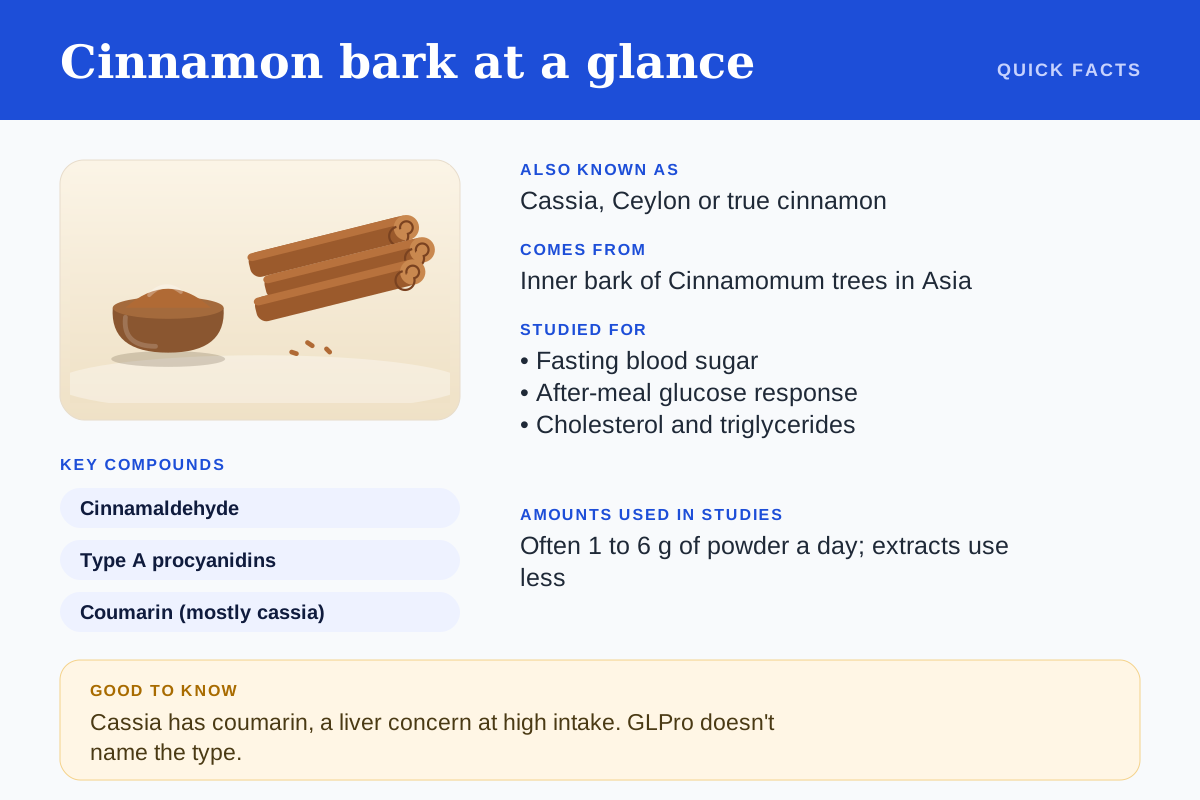
Cinnamon comes from the inner bark of several tree species in the Cinnamomum genus, part of the laurel family. Workers cut the young branches, peel away the outer bark and strip the inner layer, which curls into quills as it dries. Those quills are the cinnamon sticks you buy, and grinding them gives you the powder.
Two main types matter for health questions:
- Ceylon cinnamon (Cinnamomum verum), often called true cinnamon, grows mainly in Sri Lanka. Its sticks are thin, papery and layered, and the flavor is mild and slightly sweet.
- Cassia cinnamon (Cinnamomum aromaticum, also listed as Cinnamomum cassia) comes mostly from China and other parts of Southeast Asia. It has a thick, hard single layer of bark and a stronger, spicier taste. According to NCCIH, cassia is the most common type sold in North America.
Indonesian cinnamon (Cinnamomum burmannii) and Vietnamese or Saigon cinnamon (Cinnamomum loureiroi) are close relatives of cassia and are sold widely as well. If a jar or a supplement just says cinnamon, it is very likely one of the cassia types.
A spice with a long history
Cinnamon was one of the most traded spices of the ancient world. The Egyptians used it in perfumes and embalming, and it appears in the Hebrew Bible as an ingredient in anointing oil. Arab traders kept its origins secret for centuries to protect their prices, and European powers later fought over the cinnamon trade in Sri Lanka.
In traditional Chinese medicine, cassia bark (rou gui) is considered a warming herb and is used in formulas for cold hands and feet and digestive complaints. Ayurvedic practice in India uses cinnamon for digestion and colds. Its use as a blood sugar supplement is modern, and it grew after lab work in the early 2000s suggested that cinnamon extracts could make cells respond better to insulin.
What the research has looked at
Cinnamon has been studied mostly for fasting blood sugar, the rise in blood sugar after meals, and blood fats such as cholesterol and triglycerides. There have been many small human trials, and the results are mixed.
NCCIH points to a 2019 review of 18 studies that found cinnamon may lower blood sugar, but it did not have a significant effect on the longer term average blood sugar marker that doctors track over months. NCCIH also says results are hard to interpret because it is often unclear which species or part of the plant was tested, and it calls the overall benefit unclear.
Most of these trials enrolled adults with type 2 diabetes or with blood sugar above the normal range, so the results may not carry over to healthy people with normal numbers. If you take medicine to lower blood sugar, keep taking it and talk with your doctor before adding cinnamon supplements, since the effects could add up.
For healthy adults, cinnamon as part of a balanced diet may support healthy blood sugar levels already in the normal range and supports normal glucose metabolism after meals. The effects seen in studies were modest, so it works best as one small habit among others, such as eating fiber with starchy foods and taking a walk after dinner.
One practical detail from the research: cinnamon tends to show its effect around meals, when glucose is rising. That is why many trials gave it with breakfast or split it between meals. It is also why sprinkling cinnamon on oatmeal or yogurt is a reasonable, low risk way to include it, as long as you keep the coumarin point below in mind if you use a lot of cassia.
How cinnamon may work
Researchers have proposed a few ways cinnamon could affect glucose, mostly based on lab and animal studies:
- Slower digestion of carbohydrates. Cinnamon compounds may block enzymes in the gut, such as alpha glucosidase, that break starches into sugar, so glucose enters the blood more gradually.
- Slower stomach emptying. Some small human studies suggest cinnamon can slow the rate food leaves the stomach, which softens the spike after a meal.
- Better insulin signaling. Lab studies suggest polyphenols in cinnamon, including type A procyanidins, may help cells respond to insulin and move glucose transporters to the cell surface.
Cinnamaldehyde, the compound that gives cinnamon its smell and taste, has also been studied in the lab for effects on glucose uptake. How much of this happens in a person taking a capsule is still an open question.
Amounts used in studies
Cinnamon has no recommended daily intake. Human trials have used a wide range, which is part of why results differ. Many used whole cinnamon powder in capsules, while others used concentrated extracts that need far smaller amounts.
| Form used in research | Typical daily amount | Notes |
|---|---|---|
| Ground cinnamon powder | 1 to 6 grams | About half a teaspoon to two teaspoons, often cassia |
| Water extract of cinnamon | A few hundred milligrams | Concentrated, so less is needed |
| Food use as a spice | A pinch to a teaspoon | Considered likely safe by NCCIH |
Most trials lasted from a few weeks to about four months. There is little research on taking cinnamon supplements for years.
Safety: coumarin and other cautions
NCCIH says cinnamon is likely safe in the amounts normally used in food. In larger amounts or with long term use, the most common side effects are stomach upset and allergic reactions, including mouth sores from heavy use of cinnamon gum or oils.
Coumarin
Cassia cinnamon contains coumarin, a natural compound that can harm the liver in sensitive people at high intake. Some cassia products contain quite a lot of it. Ceylon cinnamon contains only trace amounts. Coumarin is also the parent compound of the blood thinner warfarin, though coumarin itself doesn't thin blood the same way.
The European Food Safety Authority set a tolerable daily intake for coumarin of 0.1 mg per kilogram of body weight, which works out to roughly 7 mg a day for a 150 pound adult. In 2006, Germany's Federal Institute for Risk Assessment warned against eating large amounts of cassia regularly because of coumarin. NCCIH notes that in most cases cassia doesn't supply enough coumarin to cause problems, but that prolonged use could be an issue for sensitive people such as those with liver disease.
Who should ask a doctor first
- Anyone with liver disease or who takes medicines that can strain the liver.
- People on glucose-lowering medicine, since cinnamon may add to the effect.
- People on blood thinners, as a precaution.
- Pregnant women. NCCIH says Ceylon cinnamon in larger amounts during pregnancy is considered unsafe, and little is known about larger amounts while breastfeeding.
If you take prescription medicine for blood sugar, blood pressure, blood thinning or anything else, talk to your doctor or pharmacist before using cinnamon supplements, and keep taking what you were prescribed.
Why cinnamon bark is in GLPro
According to the GLPro team, cinnamon bark extract is one of five listed ingredients, along with berberine, chromium picolinate, alpha lipoic acid and bitter melon. It is a familiar, food based ingredient with years of glucose research behind it, so it fits naturally in a blood sugar support formula. Using an extract rather than plain powder also makes sense in a one capsule a day product, since extracts are concentrated.
Two things are unknown. The brand does not publish ingredient amounts or a Supplement Facts label, so we can't say how much cinnamon extract each capsule holds. The brand also doesn't say whether it uses Ceylon or cassia, which matters for coumarin. In a single daily capsule, the coumarin from any cinnamon type is probably small, but if you have liver concerns or already eat a lot of cassia, that missing detail is worth asking the company about.
For our assessment of the whole formula, the price and the 60-day money-back guarantee, read our full GLPro review.
Frequently asked questions
Is Ceylon or cassia cinnamon better?
Both have been studied, and many trials used cassia. Ceylon contains only traces of coumarin, so it is the safer pick if you plan to use larger amounts often or have liver concerns.
Can I just eat cinnamon instead of taking a supplement?
Cinnamon in food is considered likely safe and is an easy habit. Studies used set amounts, often 1 to 6 grams of powder a day, which is more than most people sprinkle on food. If you eat a lot of cassia every day, keep the coumarin limit in mind.
Is cinnamon safe for the liver?
Normal food amounts are fine for most people. Cassia contains coumarin, which can harm the liver in sensitive people at high intake, so anyone with liver disease should ask a doctor before using cinnamon supplements.
Which type of cinnamon does GLPro use?
The GLPro team lists cinnamon bark extract but does not say whether it is Ceylon or cassia, and it does not publish the amount.
Sources
- NCCIH: Cinnamon
- European Food Safety Authority: Coumarin in flavourings and other food ingredients (2008)
- German Federal Institute for Risk Assessment (BfR): Consumers who eat a lot of cinnamon currently have an overly high exposure to coumarin (2006)
- GLPro official site (tryglpro.com): listed ingredients
This guide is for general information and is not medical advice. Talk to your doctor before starting any supplement, especially if you take medication.